Manual Lymphatic Drainage in Kuwait: A Physiotherapy Guide
Manual lymphatic drainage (MLD) is one of the most misunderstood treatments in private healthcare today. The phrase ‘lymphatic drainage’ is used loosely in spa marketing — but real MLD is a clinical physiotherapy technique, performed by a certified lymphedema therapist, with specific medical indications and evidence behind it.
This guide explains what manual lymphatic drainage actually is, who benefits from it, who shouldn’t have it, and what to expect when you book a session. At ARGAN Riaya in Salmiya,
MLD is performed only by physiotherapists with specific lymphedema training — not as a cosmetic spa treatment, but as part of a structured medical program.s of warm water that make hydrotherapy work
Hydrotherapy is not just exercising in a pool. The therapeutic effect depends on four physical properties of warm water that change how the body moves and recovers:
What manual lymphatic drainage is — and what it isn’t
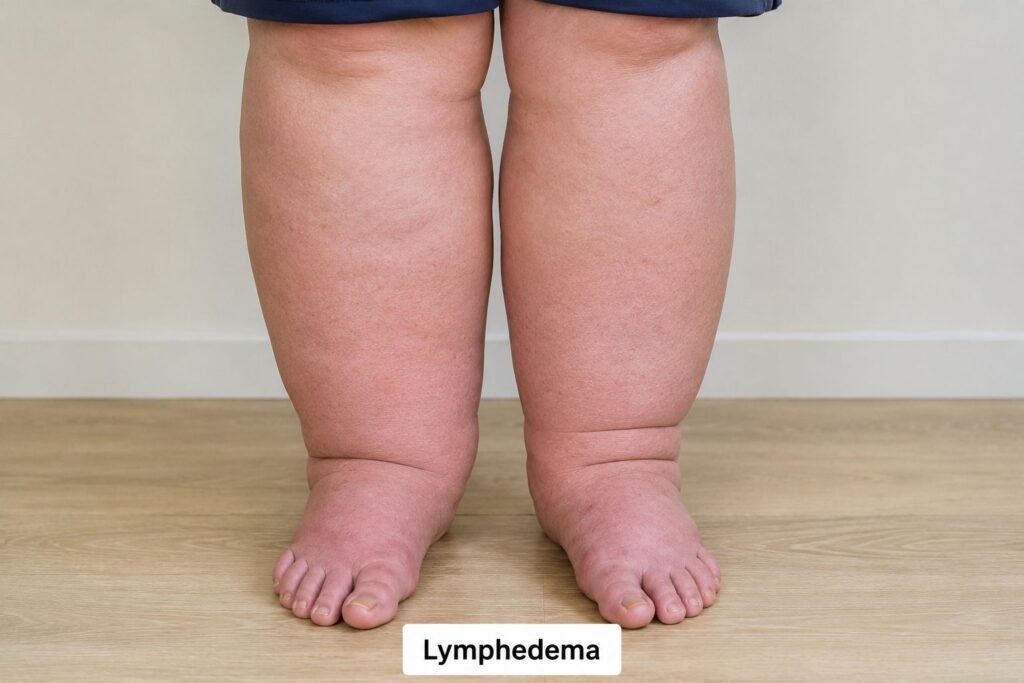
Your lymphatic system is a one-way drainage network that runs alongside your blood vessels. It collects excess fluid, proteins, and immune cells from your tissues and returns them to the bloodstream. When the lymphatic system is overloaded — by surgery, injury, infection, cancer treatment, or genetic dysfunction — fluid builds up in the tissues and causes swelling (lymphedema), heaviness, skin changes, and increased infection risk.
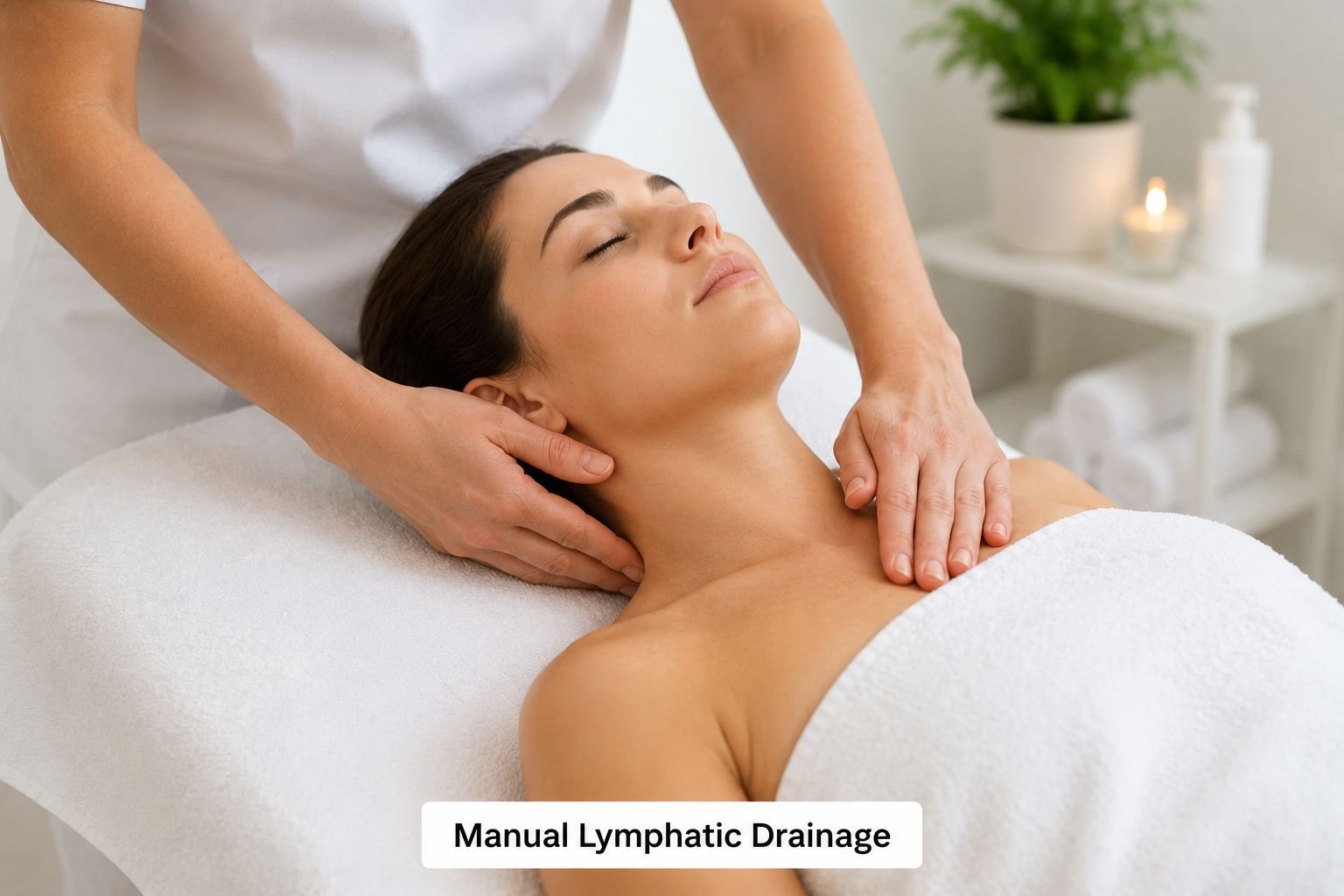
Manual lymphatic drainage is a specific physiotherapy technique developed by Dr. Emil Vodder in the 1930s and refined into the major modern schools — Vodder, Földi, Leduc, and Casley-Smith. The technique uses very light, slow, rhythmic strokes that are calibrated to the depth of the superficial lymphatic vessels (just beneath the skin). It is not a deep tissue massage, and it is not a Swedish or aromatherapy massage.
MLD is rarely used as a stand-alone treatment. The international evidence supports its use as one component of Complete Decongestive Therapy (CDT), which combines four elements:
- Manual lymphatic drainage
- Multi-layer compression bandaging or compression garments
- Therapeutic exercise to support lymph flow
- Skin and nail care to prevent infection
A certified lymphedema therapist (CLT) is qualified to deliver all four elements, not just the hands-on MLD.
Conditions treated with manual lymphatic drainage
Lymphedema (primary and secondary)
Primary lymphedema is a genetic condition where the lymphatic system did not develop properly. Secondary lymphedema is acquired — most commonly after lymph node removal or radiation during cancer treatment, particularly breast, gynaecological, head and neck, prostate, and melanoma surgeries. MLD is one of the cornerstones of lymphedema management.
Post-mastectomy and post-cancer-surgery swelling
Up to 1 in 5 women treated for breast cancer develop arm lymphedema, and the risk is lifelong. Early-stage lymphedema responds best to MLD combined with compression — making early referral to a certified lymphedema therapist clinically important. Patients in Kuwait who have undergone mastectomy, axillary node dissection, or radiation should be assessed for lymphedema risk and educated on early warning signs.
Post-orthopedic-surgery swelling
After knee replacement, ACL reconstruction, ankle surgery, hand surgery, and other orthopedic procedures, lymphatic and venous return are temporarily impaired. MLD reduces swelling, accelerates the start of physiotherapy, and reduces post-operative pain — which is why it is included in many enhanced-recovery orthopedic protocols. ARGAN Riaya’s MLD service integrates directly with our orthopedic and post-surgical rehab programs.
Post-cosmetic-surgery (liposuction, abdominoplasty, body contouring)
Post-liposuction MLD is one of the most-requested services in the Gulf. The evidence here is more limited than for medical lymphedema, but most plastic surgeons recommend a course of MLD starting 1–2 weeks post-operatively to reduce swelling, soften fibrosis, and improve the final cosmetic result. Insist on a physiotherapist with lymphedema certification — not a spa technician — for these sessions.
Lipedema
Lipedema is a chronic disorder of fat distribution, almost exclusively in women, that causes disproportionate enlargement of the legs (and sometimes arms). It is often misdiagnosed as obesity or lymphedema. MLD as part of CDT can reduce pain and the swelling component, although it does not reduce the fat itself.
Chronic venous insufficiency
Chronic leg swelling from incompetent leg veins responds to MLD plus compression therapy as part of a broader vascular treatment plan.
Other indications
- Post-traumatic edema (sprains, fractures, soft-tissue injuries)
- Selected chronic pain syndromes (fibromyalgia, complex regional pain syndrome) as adjunctive therapy
- Post-stroke arm swelling
- Migraine and tension headache (selected protocols)
Who should NOT have MLD
MLD is gentle, but it is a medical treatment with real contraindications. We screen every patient at the initial assessment. Absolute and relative contraindications include:
- Active untreated infection (cellulitis, erysipelas) — treat the infection first
- Acute deep vein thrombosis (DVT) — must be excluded or treated before MLD
- Decompensated heart failure — fluid mobilization can overload the heart
- Active untreated cancer — modern oncology evidence has softened this concern, but MLD over an active tumour or near new untreated nodes should be avoided. Most cancer survivors in remission are appropriate for MLD.
- Acute kidney failure
- Hypothyroidism that is untreated
- Open wounds in the treatment area
This is why MLD belongs in a clinical physiotherapy department — not a spa. We coordinate with your treating physician when there is any uncertainty.
What a session looks like
At ARGAN Riaya, your first appointment is a clinical assessment, not a treatment session. The physiotherapist takes a full history, measures the affected limb circumferences, screens for contraindications, examines the skin, and (where indicated) reviews recent imaging. We then build a treatment plan — typically a course of 10 to 20 sessions of MLD plus compression, followed by a long-term self-management program.
A typical MLD session lasts 45 to 60 minutes. The therapist works with bare hands (no oils or creams that could lubricate the skin and lose the MLD effect) using very light, specific stroke patterns that move from healthy lymphatic territories toward the affected area, then drain it toward the nearest functioning lymph nodes. After the hands-on portion, multi-layer
compression bandaging may be applied — this is where short-stretch bandages are layered along the limb to maintain the gain achieved during the manual session.
How MLD differs from a spa lymphatic drainage massage
If you have been searching for ‘lymphatic drainage massage Kuwait’, you’ve likely found options ranging from medical clinics to spas to home-visit services. The differences matter:
- Training: a certified lymphedema therapist completes 135+ hours of post-graduate training. A spa technician may have 1 to 3 days of training.
- Assessment: a CLT measures the limb, screens contraindications, and may coordinate with your physician. A spa session typically does not.
- Pressure: real MLD uses very light pressure (around 30 mmHg). Many spas use too much pressure, which is not only ineffective but can damage delicate lymphatic vessels.
- Outcome tracking: a CLT measures progress with circumferential limb measurements and adjusts the program accordingly.
- Insurance: medical MLD is covered by most insurance plans operating in Kuwait when there is a medical indication. Spa massage is not.
Book an MLD assessment in Kuwait
ARGAN Riaya’s lymphatic drainage program is delivered by certified physiotherapists, integrated with our orthopedic, post-surgical and oncology-rehab pathways. Call our Salmiya hospital to book your initial assessment.
Frequently asked questions about manual lymphatic drainage in Kuwait
How is MLD different from a regular massage?
Regular massage uses moderate-to-deep pressure and aims to release muscle tension. MLD uses very light, slow, rhythmic skin stretches calibrated to the superficial lymphatic vessels just beneath the skin. The two techniques are not interchangeable — deep massage on a lymphedematous limb can damage tissue.
Does MLD hurt?
No. Properly performed MLD is virtually painless and most patients describe it as deeply relaxing. If a session feels firm or painful, it is not MLD.
How many sessions of MLD will I need?
It depends on your condition. Post-orthopedic-surgery swelling may resolve in 4 to 8 sessions. Established lymphedema typically requires an intensive phase of 10 to 20 sessions plus compression, followed by a maintenance phase you manage at home with self-MLD and compression garments.
Is manual lymphatic drainage safe after cancer treatment?
Modern lymphedema care strongly supports MLD for cancer-related lymphedema, including after breast cancer surgery and radiation. Precautions apply to patients with active untreated cancer or new unexplained nodes. Our therapists coordinate with your oncologist when any uncertainty exists.
Does insurance in Kuwait cover MLD?
Most major insurance plans operating in Kuwait cover MLD when there is a medical indication (lymphedema, post-surgical edema, etc.) and a physician referral. Coverage for cosmetic post-liposuction MLD is typically out-of-pocket. We verify your coverage before treatment begins.
Can I have MLD after liposuction or abdominoplasty in Kuwait?
Yes — and most plastic surgeons recommend it. We coordinate timing with your surgeon (typically starting 1 to 2 weeks post-operatively, once incisions are sealed) and adapt the technique to the surgical sites. Look for a physiotherapist with lymphedema certification, not a spa technician.
How quickly will I see results?
For acute post-surgical edema, most patients see visible reduction in swelling within 3 to 5 sessions. For established lymphedema, measurable circumferential reduction usually appears within the first 1 to 2 weeks of intensive treatment.
Can I do lymphatic drainage at home?
Yes — self-MLD is a key part of long-term management. After your intensive course, your therapist teaches you a personalized self-MLD routine. We also fit and prescribe the appropriate compression garment, which is essential for maintaining your gains.